10 Best High-Protein, Low-Calorie Foods to Aid Your Weight Loss
Whether you are starting a weight-loss plan or simply looking to make your current meals more satisfying, high-protein, low-calorie foods can help. This guide covers ten practical choices, from tender chicken breast to creamy tofu, each one easy to prepare and suited to everyday eating. You will find simple preparation tips, helpful comparisons, and plenty of ideas for breakfasts, lunches, and dinners that keep your plate interesting and your hunger in check.
Why high-protein, low-calorie foods can support weight loss
Eating well while managing your weight is largely about choosing foods that give you more nutritional value per bite. high-protein, low-calorie foods fit that description naturally because they deliver filling protein without tipping your daily calorie budget. When your meals are built around these ingredients, you are more likely to feel satisfied between meals and less tempted to reach for snacks.
For guidance on balancing food groups across the day, see the NHS Eatwell Guide.
Table of Contents
10 high-protein, low-calorie foods to add to your diet
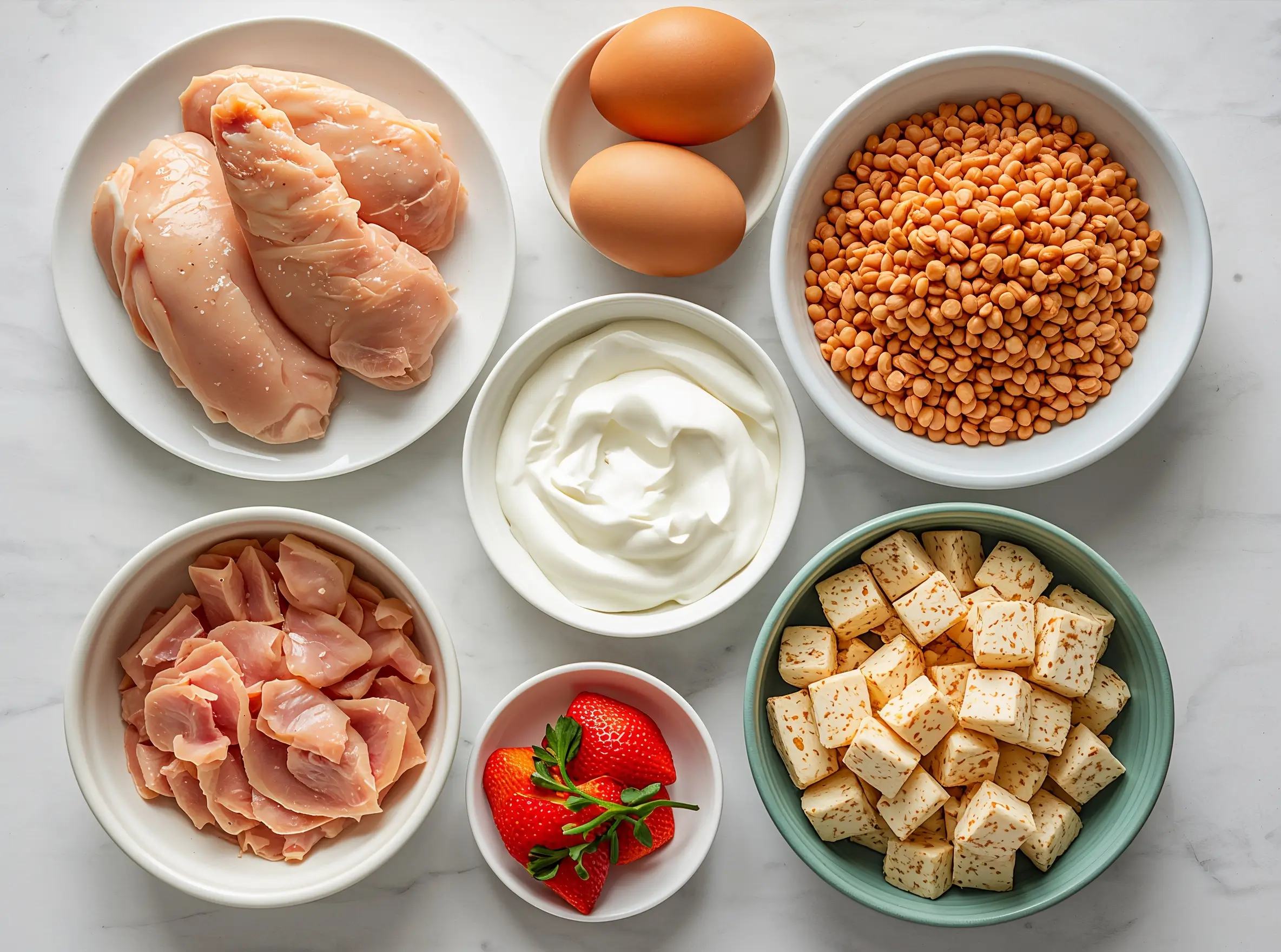
Each food below brings something different to the table in terms of flavour, texture, and versatility. You can mix and match them across the week to keep meals fresh.
1. Chicken breast
Chicken breast is one of the most reliable high-protein, low-calorie foods available, largely because it is lean, affordable, and takes on whatever seasoning you give it. A medium skinless breast (roughly 150 g cooked) provides around 46 g of protein for approximately 230 calories. Grill, bake, or poach it and slice it into salads, wraps, or grain bowls. Brining in a pinch of salt and sugar for 30 minutes before cooking helps keep it juicy if you tend to overcook it.
2. Greek yogurt
Greek yogurt is thick, tangy, and packed with protein, making it a natural replacement for sour cream or mayonnaise in many dishes. A 170 g serving of plain, unsweetened Greek yogurt contains roughly 15–20 g of protein and about 100 calories. Use it as a base for dressings, a topping for chilli, or a simple snack with a handful of berries. Check the label for added sugar; plain varieties give you the most protein for the fewest calories.
3. Eggs
Eggs are compact, inexpensive, and endlessly practical, which is why so many high-protein, low-calorie meal plans start here. One large egg offers about 6 g of protein and 70 calories. You can boil a batch at the start of the week, scramble them for breakfast in under three minutes, or fold them into a vegetable omelette for dinner. Keep hard-boiled eggs in the fridge for a grab-and-go snack that requires no preparation.
4. Cottage cheese
Cottage cheese has a mild, slightly creamy flavour that pairs well with both sweet and savoury toppings. A 120 g serving of low-fat cottage cheese delivers around 14 g of protein at roughly 90 calories. Try it topped with pineapple, mixed with cherry tomatoes and herbs, or blended into a smoothie for extra protein. Its soft texture also makes it a useful substitute for ricotta in pasta dishes.
5. Tuna
Tuna is a shelf-stable, high-protein, low-calorie option that works in salads, sandwiches, and pasta dishes. One 120 g tin of tuna in water provides about 25 g of protein and only 110 calories. Drain it well and mix with Greek yogurt or mustard instead of mayonnaise to keep the calories down. Fresh tuna steak is equally lean; sear it quickly over high heat and serve it sliced over a green salad.

6. Shrimp
Shrimp cooks in minutes, has a naturally sweet, delicate flavour, and is one of the leanest animal proteins available. Around 100 g of cooked shrimp gives you approximately 24 g of protein for just 120 calories. Sauté it with garlic and chilli flakes, toss it into a stir-fry, or thread it onto skewers with vegetables for a quick grill session. Because shrimp overcooks easily, watch it closely and remove it as soon as it turns pink.
7. Turkey breast
Turkey breast is similar to chicken breast in its nutritional profile but offers a slightly different, firmer texture that works well in sandwiches and salads. A 120 g serving of cooked turkey breast contains roughly 30 g of protein and about 135 calories. Roast a whole breast on Sunday and slice it through the week, or buy pre-sliced turkey breast for instant lunches. Its mild flavour accepts spices like paprika, cumin, or herbs de Provence without overpowering the dish.
8. Lentils
Lentils bring plant-based protein, fibre, and a satisfying earthy taste to any meal. Half a cup of cooked lentils (about 100 g) provides around 9 g of protein and 115 calories. They simmer in roughly 20 minutes with no soaking required, which makes them ideal for weeknight soups, stews, and dals. Red lentils break down into a creamy texture perfect for curries, while green and brown lentils hold their shape and are better in salads.
9. Edamame
Edamame are young soybeans with a bright green colour, a gentle nutty flavour, and a pleasantly firm bite. One cup of shelled edamame (about 155 g) delivers roughly 17 g of protein and 120 calories. You can buy them frozen and steamed in the pod as a snack, or shell them and toss them into grain bowls, noodles, or rice dishes. Their vibrant colour also makes them a natural garnish that brightens up plain plates.
10. Tofu
Tofu absorbs whatever flavours it is cooked with, making it one of the most versatile high-protein, low-calorie foods in a vegetarian kitchen. A 120 g block of firm tofu contains about 15 g of protein and only 110 calories. Press it for 20 minutes to remove excess water, then cube and bake or pan-fry until golden for a satisfying crunch in stir-fries and salads. Silken tofu, blended with lemon juice and garlic, makes a creamy base for dressings and dips.
How to choose high-protein, low-calorie foods for your meals
Building balanced meals is simpler once you know what to look for at the grocery store and how to compare options.
Compare protein, calories, and portion sizes
When choosing between similar ingredients, check how much protein you get relative to the calorie count. Chicken breast and tuna rank very well here, offering large protein portions for modest calories. Read serving sizes carefully, because a package may list two servings, which can make the nutrition numbers appear more favourable than they really are. Weighing your portions for a few days helps train your eye and makes choosing high-protein, low-calorie foods second nature.
Choose cooking methods that keep calories low
How you cook a food changes its final calorie count just as much as the ingredient itself. Grilling, baking, steaming, and poaching add virtually no extra fat, while deep-frying can double or triple the calorie content of an otherwise lean choice. A splash of oil for flavour is perfectly fine, but measure it rather than pouring freely from the bottle. These simple habits let the natural nutrition of your high-protein, low-calorie ingredients shine through.
Simple ways to eat more high-protein, low-calorie foods
Spreading your protein intake across the day keeps energy levels steady and reduces the chance of an afternoon energy crash.
High-protein breakfast ideas
Start the morning with scrambled eggs and a side of Greek yogurt topped with sliced almonds. Alternatively, blend silken tofu into a smoothie with banana and cocoa powder for a dairy-free option. On busy days, hard-boiled eggs and a small pot of cottage cheese prepared the night before give you a protein-rich breakfast you can eat on the move.
High-protein lunch and dinner ideas
For lunch, try a tuna salad made with Greek yogurt instead of mayonnaise, served over a bed of mixed greens and cherry tomatoes. Dinner options are equally straightforward: bake a chicken breast with herbs and serve it alongside lentils and roasted vegetables, or stir-fry shrimp with edamame, bell peppers, and a light soy-ginger sauce. Turkey breast sliced thinly and layered into a whole-grain wrap with plenty of raw vegetables makes a satisfying midweek meal.
Frequently asked questions about high-protein, low-calorie foods
Which high-protein, low-calorie foods have the most protein?
Chicken breast, tuna, and shrimp sit at the top for protein per calorie among animal-based choices. For plant-based options, lentils, edamame, and tofu offer the strongest protein-to-calorie ratios. Combining two or three of these foods in a single meal, such as a lentil and tofu stir-fry, can push a dish well into high-protein territory while keeping calories moderate.
How much protein should I eat when trying to lose weight?
A common target for weight loss is roughly 1.2–1.6 g of protein per kg of body weight per day, though individual needs vary based on activity level and overall calorie intake. Spreading that amount across three or more meals helps your body use it efficiently. Prioritising high-protein, low-calorie foods at each meal makes hitting this target feel natural rather than forced.
Can vegetarians eat enough high-protein, low-calorie foods?
Absolutely. Tofu, lentils, edamame, cottage cheese, eggs, and Greek yogurt all deliver strong protein numbers per calorie, and combining them throughout the day covers essential amino acids easily. A vegetarian plate built around lentils, tofu, and plenty of vegetables can match or outperform a meat-based plate for protein density. Variety is the key, and the foods in this list give you plenty of it.
Final thoughts
Choosing the right high-protein, low-calorie foods is one of the most practical steps you can take toward sustainable weight loss. Pick a few favourites from this list, experiment with different seasons and cooking methods, and build meals around them week after week. Which of these ten foods will you try first?Check out our High-Protein Breakfasts for easy morning inspiration. Which recipe will you try first?